Not every day you hear a senior government official essentially tell a foreign mega-investor, “Please don’t panic.” As of late February 2026, that’s precisely the signal broadcasting out of Jakarta — and the frequency is getting louder.
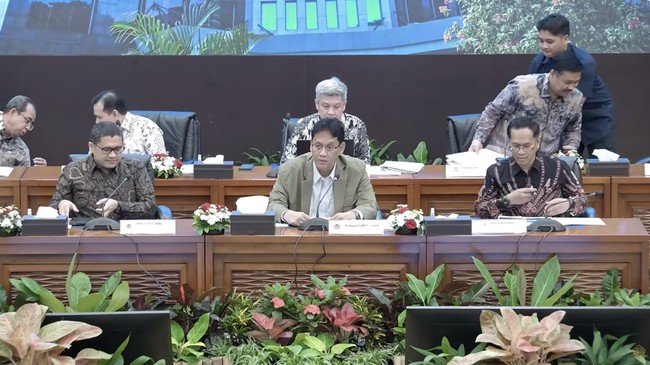
Finance Minister Purbaya Yudhi Sadewa sat down on Tuesday, February 24, 2026, with representatives from Japan’s Inpex Corporation, chairing a coordination meeting for the Abadi Masela onshore LNG project. His primary mission — to make absolutely, unambiguously clear that Indonesia will not yank the floor out from under this colossal energy venture. Per CNBC Indonesia, the tone in that room was deliberate, measured, and not a little urgent.
When you’re committing tens of billions of dollars to a deepwater trench sitting 160 kilometers off the coast of a remote island, you want ironclad certainty. The rules of the game cannot change at halftime. Purbaya knows this — and he knows that the history of emerging-market infrastructure is littered with the wreckage of renegotiated deals, spooked investors, and half-built plants rusting in tropical humidity.
“I want to emphasize that Indonesia has never changed the regulations and contracts that have been signed. We always respect our contracts or obligations,” Purbaya told the Inpex delegation.
— Purbaya Yudhi Sadewa, Minister of Finance
Strong words. Necessary ones, too. Because the Masela Block isn’t just another oil and gas play — it’s an economic lifeline, a geopolitical anchor, and a staggering technological headache compressed into a single project file.
6.97 Trillion Cubic Feet: The Number That Explains Everything
To understand why Jakarta is rolling out this particular red carpet, you have to reckon with the sheer mass of the Abadi gas field. Beneath the Arafura Sea lies an estimated 6.97 trillion cubic feet of natural gas. That is not a rounding error. That is a generational reserve.
Once operational, the block is slated to produce 9.5 million metric tons per annum (MMTPA) of liquefied natural gas, alongside 150 million standard cubic feet per day of piped gas and 35,000 barrels of condensate daily. Output on that scale reshapes regional energy markets — full stop.
And the appetite for it is real. According to the International Energy Agency, global LNG demand is set for sustained expansion through the late 2020s, propelled by Asian economies stepping back from heavier fossil fuels. Japan — chronically resource-poor — treats projects like Masela through the lens of hard national security calculus. Inpex isn’t just a corporate entity here. They are a proxy for Tokyo’s grid staying live.
Extracting that gas, though, is an engineering ordeal. Abadi is a greenfield build — meaning every bolt, every cable, every kilometer of pipeline starts from zero. Water depths range from 400 to 800 meters. The project demands complex subsea infrastructure, a Floating Production Storage and Offloading (FPSO) vessel, and a sprawling onshore LNG plant on Yamdena Island. The financial exposure is staggering. If the regulatory environment wobbles even modestly, the entire project’s economics unravel.
When a Finance Minister Tells You the Bullet Might Stray
Here’s where Purbaya’s remarks get genuinely fascinating — not just diplomatically, but editorially. He didn’t traffic in vague assurances. He offered a dose of unvarnished political reality, which, from a sitting finance minister, is rarer than you’d think.
While guaranteeing the sanctity of signed contracts, Purbaya openly conceded that future legislation — tax reform, environmental standards, labor codes — will inevitably emerge. Broad national policy doesn’t get written around a single project. And sometimes, those sweeping regulatory updates clip existing mega-investments without anyone intending it.
“But maybe someday we will make some rules or regulations that oversee things,” Purbaya explained. “It doesn’t intentionally affect the contract, but because of the ripple effects, maybe it affects your contract.”
Remarkably candid. He was essentially saying: We won’t aim at you — but you might catch a stray round from our own bureaucracy. That kind of honesty cuts both ways: it’s disarming, and it’s also a quiet admission that the machinery of Indonesian governance doesn’t always move in a straight line.
Regulatory unpredictability is the ultimate deterrent for foreign direct investment. A 2023 report by the World Bank found that erratic policy environments typically rank among the top barriers to mobilizing private capital in developing energy sectors. Investors can build models that absorb engineering failures or commodity price collapses. What they cannot model — what breaks the spreadsheet entirely — is a sudden legislative lurch.
So Purbaya floated a workaround. Communication. Direct, fast, no-ceremony communication. He urged Inpex to immediately flag any new regulation that disrupts operations so the government can carve out tailored adjustments. “Tell us if that happens. We will adjust… So, Sir, don’t be afraid,” he said.
Don’t be afraid. Oddly personal language for the rigid theater of international energy finance. It exposes a deep anxiety in Jakarta about losing momentum on a project that has already burned through decades of delay — and goodwill.
How a 1998 Contract Became Indonesia’s Most Complicated Inheritance
You can’t fully read this meeting without looking in the rearview mirror. The Production Sharing Contract (PSC) for Masela was originally inked in 1998 — since extended to 2055. That’s a 57-year arc of obligation.
Sit with that timeline. 1998. Indonesia was convulsing through the Asian Financial Crisis. Governments have risen and collapsed since then. The project itself became a political football in the mid-2010s, when fierce domestic debate erupted over whether processing facilities should be built offshore or hauled onshore to funnel economic benefit into local communities. Jakarta ultimately mandated the onshore route — a call that fundamentally restructured the project’s economics and added years of friction to an already strained relationship with Inpex.
The government spent a hard chunk of its credibility capital during those years. Now, with the energy transition accelerating globally, the window to monetize vast fossil fuel reserves is contracting — not dramatically, but visibly. Jakarta needs Inpex bending metal and pouring concrete. The era of productive political theater is over.
The CCS Gamble: Building a Reverse Plant Next to the Main One
Layered on top of everything else is the modern requirement for “clean” gas. You can’t pump carbon freely into the atmosphere in 2026 and expect premium buyers in Japan or South Korea to sign off cheerfully on your cargo manifest. The calculus has shifted.
To future-proof the investment, the Masela Block is integrating Carbon Capture and Storage (CCS) technology — targeting low-emission LNG output that aligns with Indonesia’s broader decarbonization commitments while threading the needle on energy transition realities. Sounds elegant in a briefing deck. In practice, when actually tested against real-world offshore conditions, it’s brutally complicated.
According to the Global CCS Institute, commercial carbon capture facilities are scaling up across the industry, but integrating them into deepwater offshore environments typically remains capital-intensive and technically precarious. You are, in essence, constructing a massive gas extraction plant — and then building a reverse-plant immediately adjacent to it, designed to compress and bury the waste back into geological formations below the seafloor. Elegant in theory. Expensive in every other dimension.
That CCS requirement represents a monumental technological wager for Inpex and its partners, including Indonesia’s state-owned Pertamina Hulu Energi (PHE). It piles billions onto an already mountainous capital expenditure. And when a company shoulders that magnitude of cutting-edge risk, the bare minimum they require from the host government isn’t enthusiasm or press releases — it’s a predictable, stable legal and tax framework. Non-negotiable.
Why is the Masela Block so critical for Indonesia?
Beyond the obvious export revenue, the project functions as a regional development engine of rare scale. Construction and operational phases are projected to absorb up to 10,000 workers. For Maluku province — historically one of Indonesia’s most underserved regions — this represents a generational economic injection capable of reshaping local infrastructure, supply chains, and downstream industries for decades.
Jakarta’s Tightrope: Sovereign Laws vs. Nervous Billions
What unfolded in Jakarta on Tuesday was a quiet masterclass in economic diplomacy. Purbaya walked a razor-thin line — defending Indonesia’s sovereign right to legislate freely, while simultaneously wrapping a warm, deliberate arm of reassurance around a Japanese energy giant carrying $20 billion worth of exposure.
The message, distilled: Indonesia is open. Contracts are treated as sacred. But the bureaucracy remains the bureaucracy — so keep the government on speed dial when something feels off.
Is that a reassuring message for a project of this scale? Honestly, it depends on who’s reading it. For seasoned investors who’ve worked in Southeast Asian markets long enough to know how these dynamics play out, Purbaya’s candor might actually read as more credible than a polished, say-nothing guarantee. Acknowledgment of risk — paired with a mechanism to manage it — beats hollow optimism every time.
As the world scrambles for secure, relatively cleaner energy to bridge the gap between coal dependency and fully renewable grids, projects like Abadi Masela function as load-bearing pillars of the regional economy. If Indonesia can successfully shepherd this 6.97 TCF reservoir to first gas without a regulatory breakdown — or a political relapse into the friction of the 2010s — it will serve as a compelling proof-of-concept for the country’s investment climate. Other mega-projects are watching. Other investors are drawing conclusions.
If not? Well. There’s a reason the Finance Minister of the world’s fourth most populous nation had to look a corporate delegation in the eye and say, “Don’t be afraid.”
Fear, in the energy sector, carries a very specific price tag. And right now, Jakarta is doing everything in its power to keep that invoice from arriving.
Based on reporting from various media outlets. Any editorial opinion is that of the author.